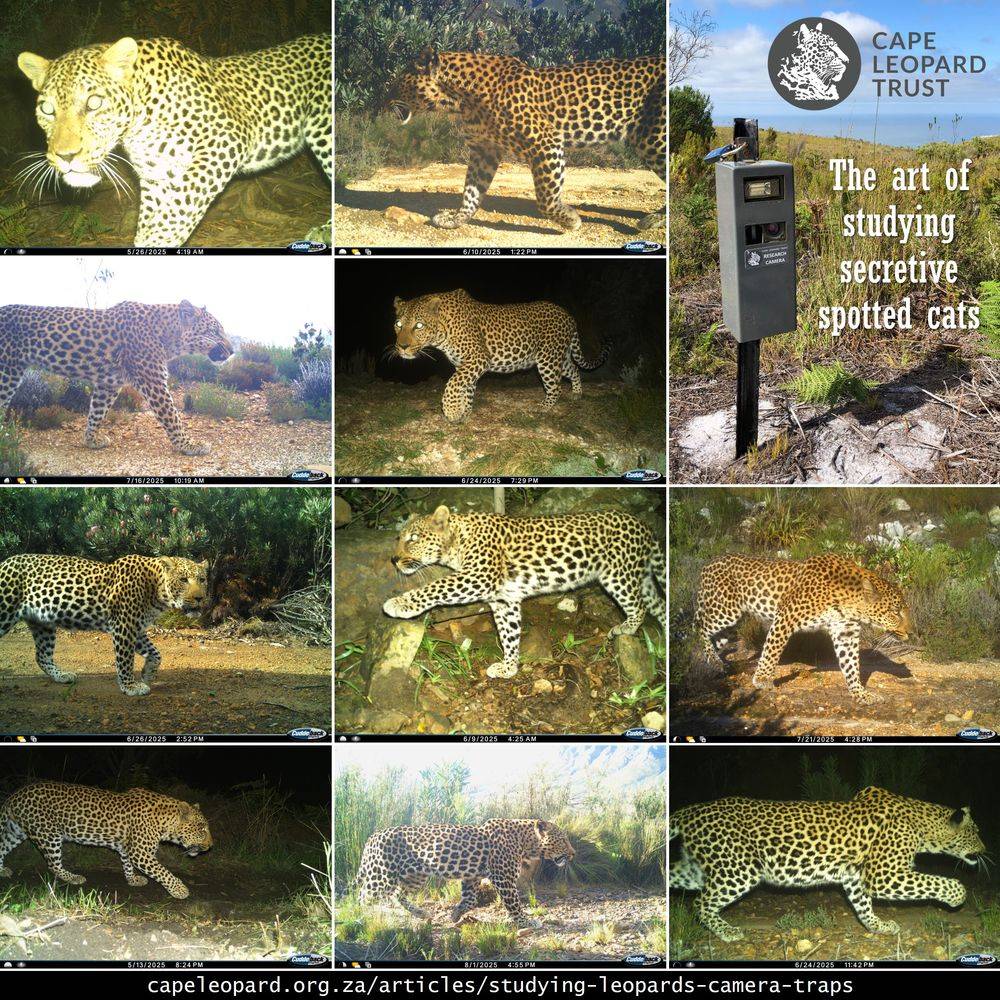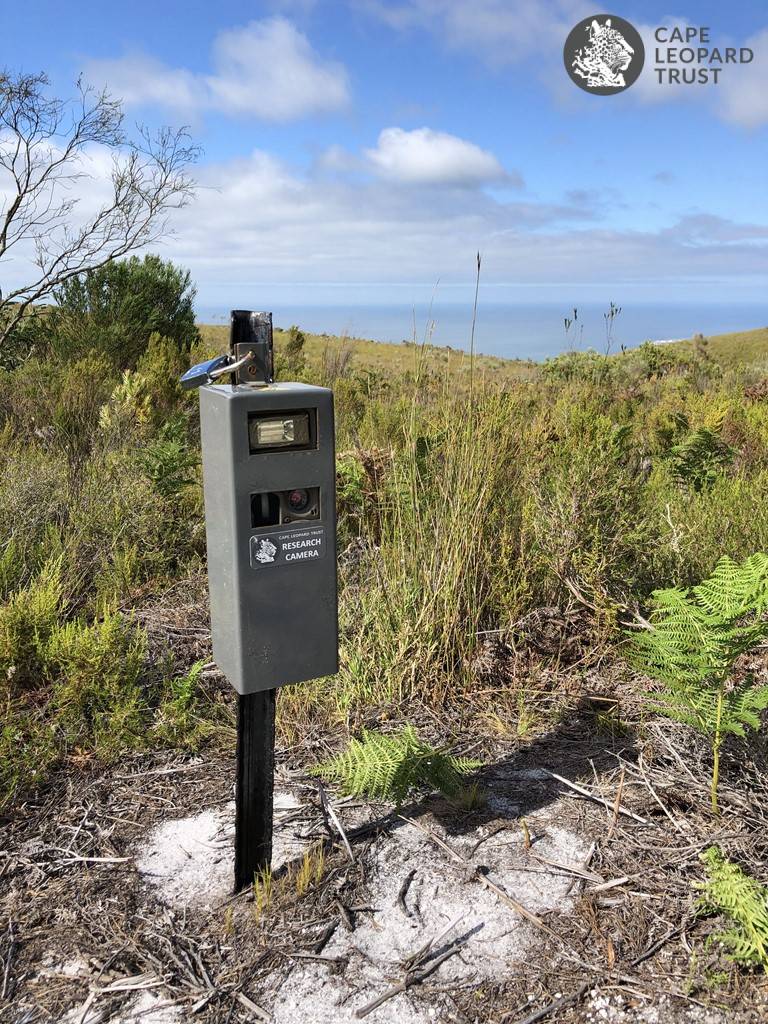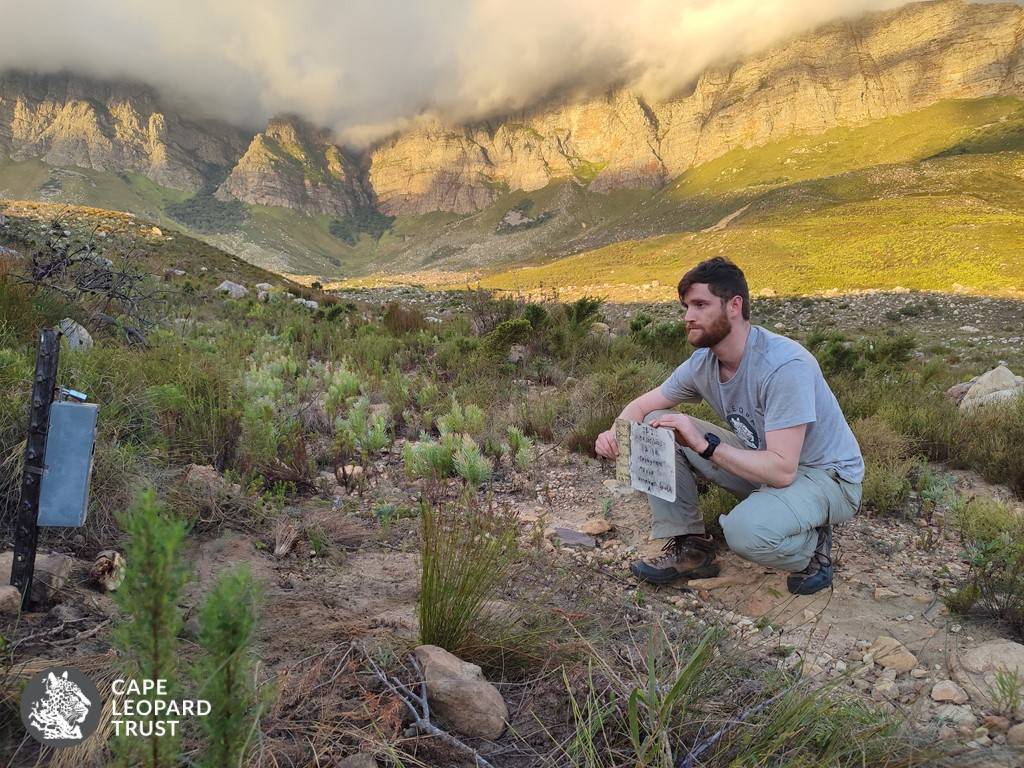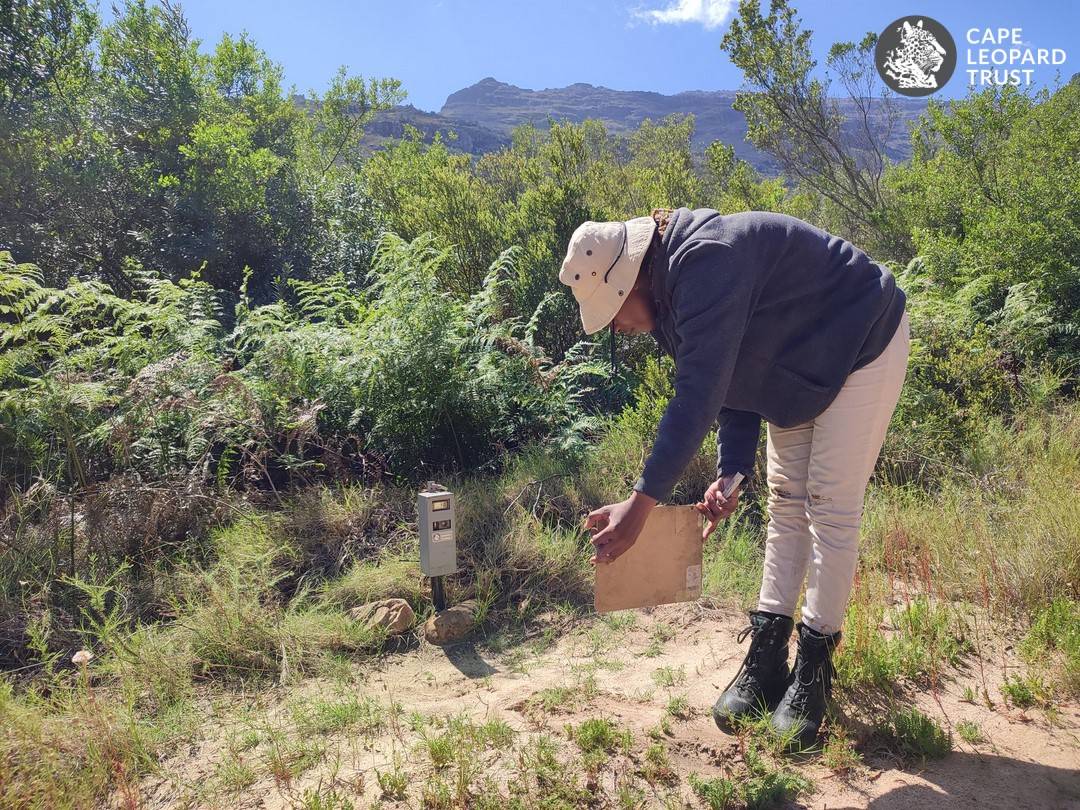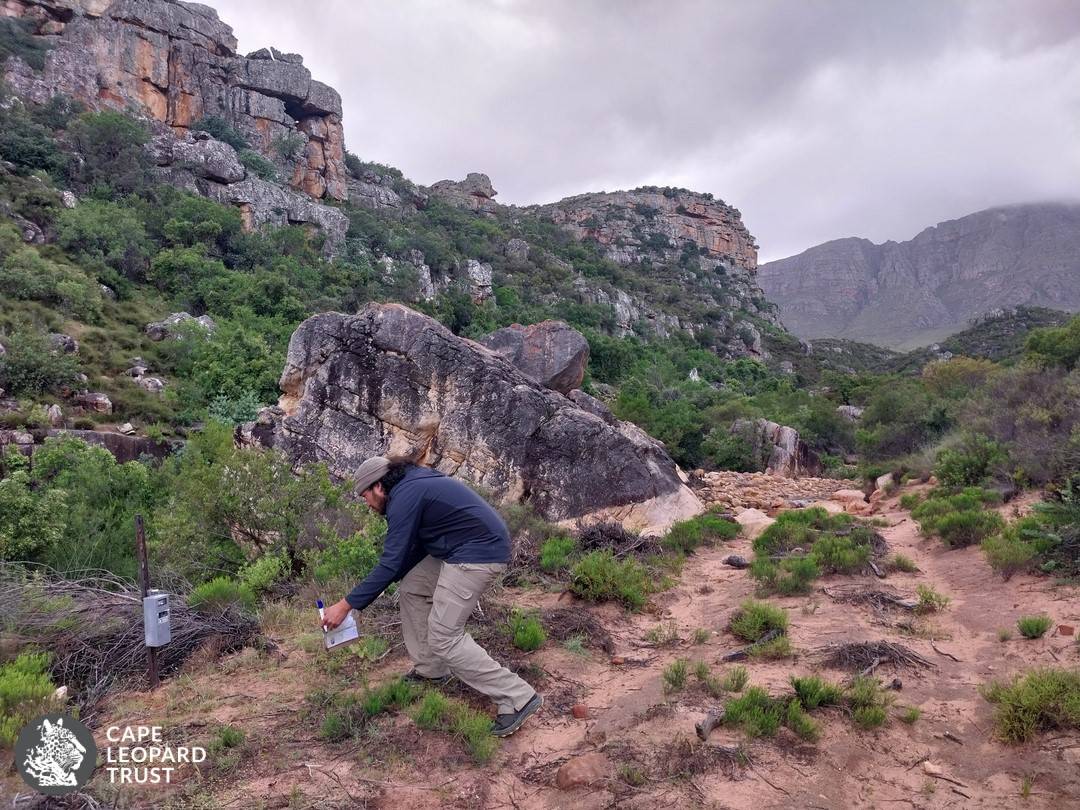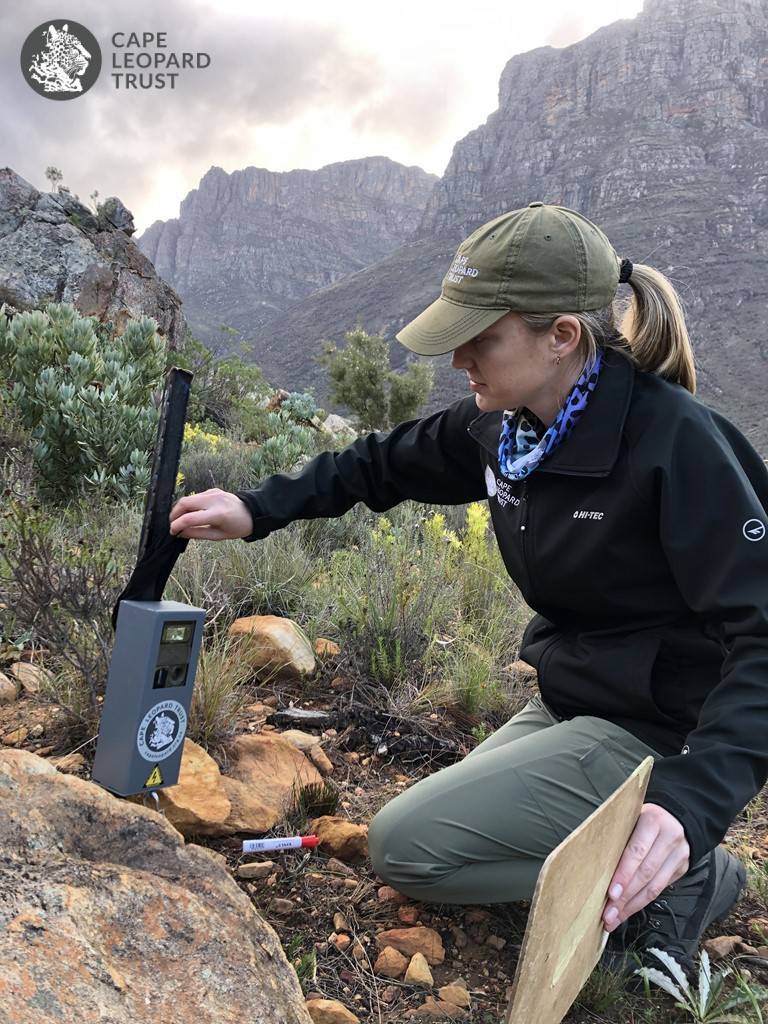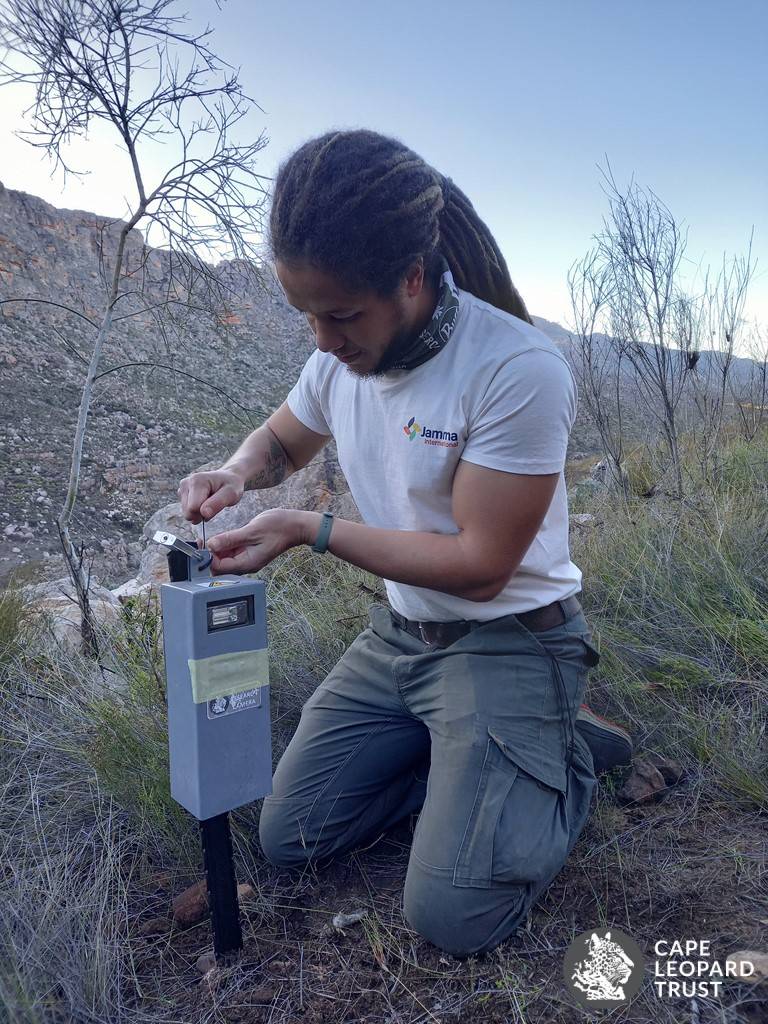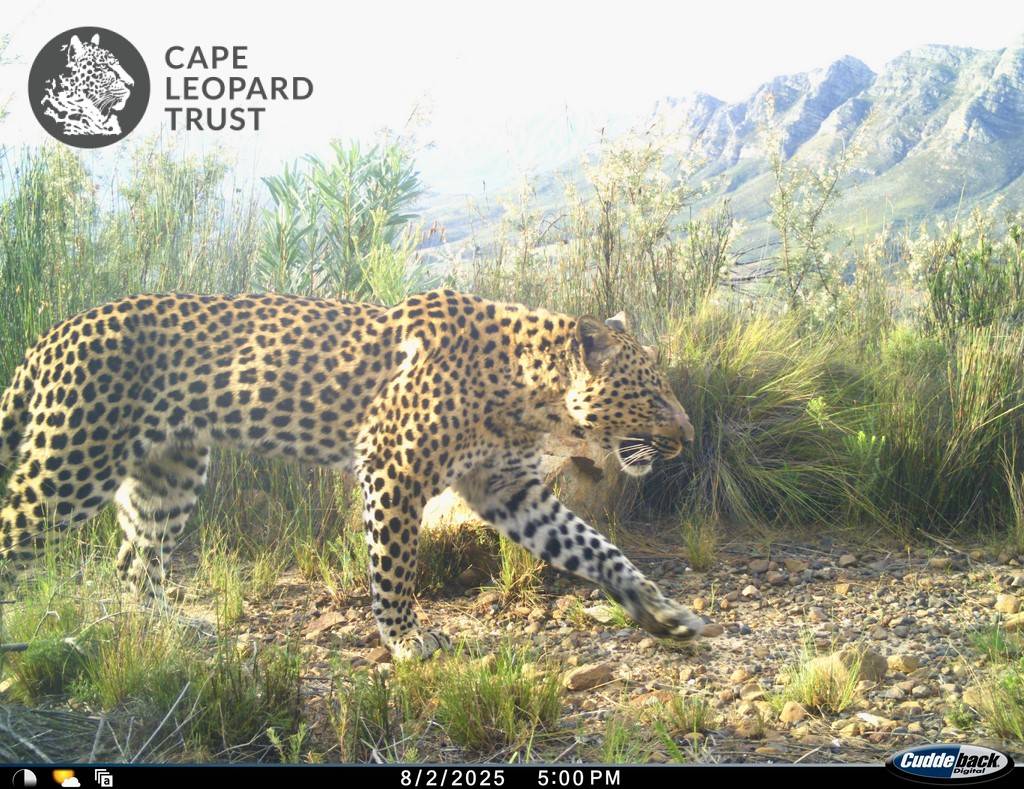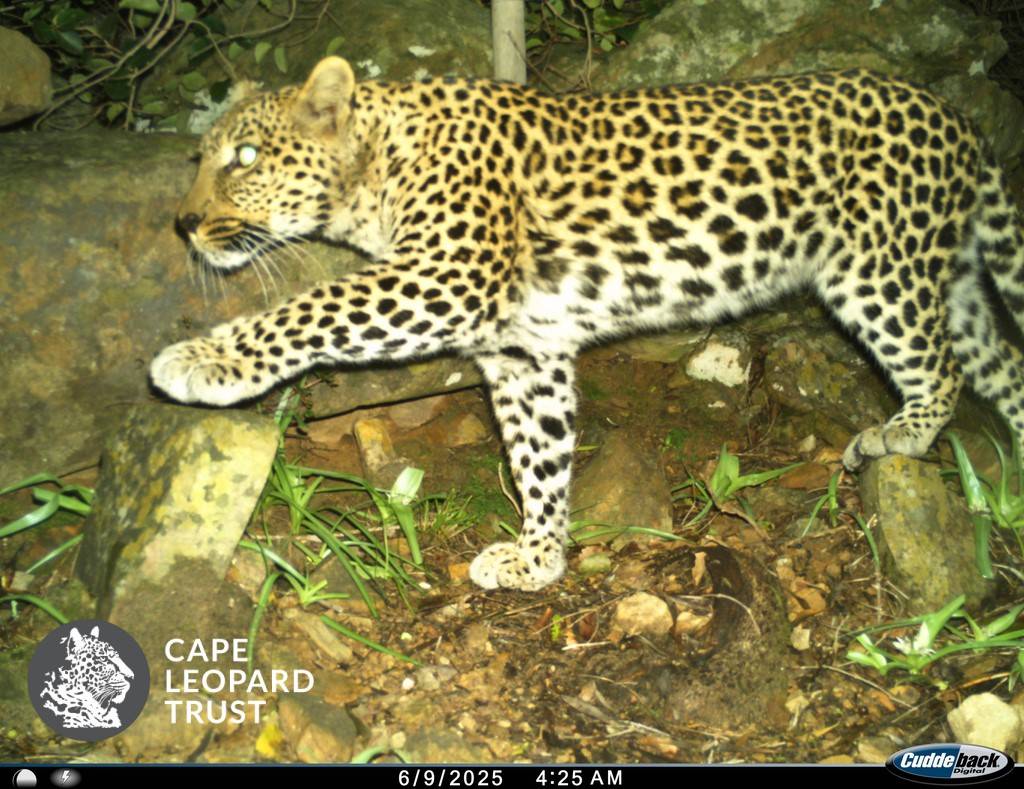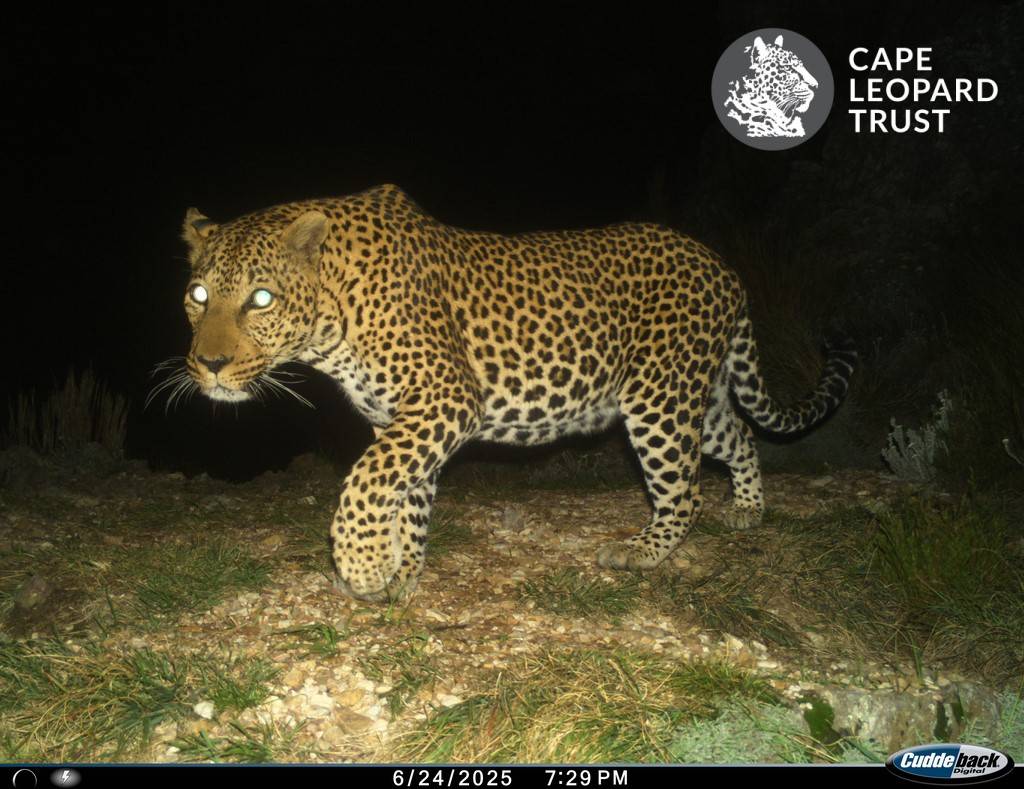

Fortunately, technology has provided a solution: digital cameras, containing an infrared sensor triggered by motion and heat, aka a ‘camera trap’ or 'trail camera'. They are like permanent fieldworkers, working day and night, in rain or sunshine. Camera traps are an invaluable component of the Cape Leopard Trust's research toolbox.
Camera trapping has proved to be a very effective way of estimating the numbers of elusive and nocturnal predators with individually identifiable coat patterns, such as leopards, jaguars and tigers. It is a non-invasive and comparatively affordable option, since it does not require the capture, handling, or immobilisation of animals.
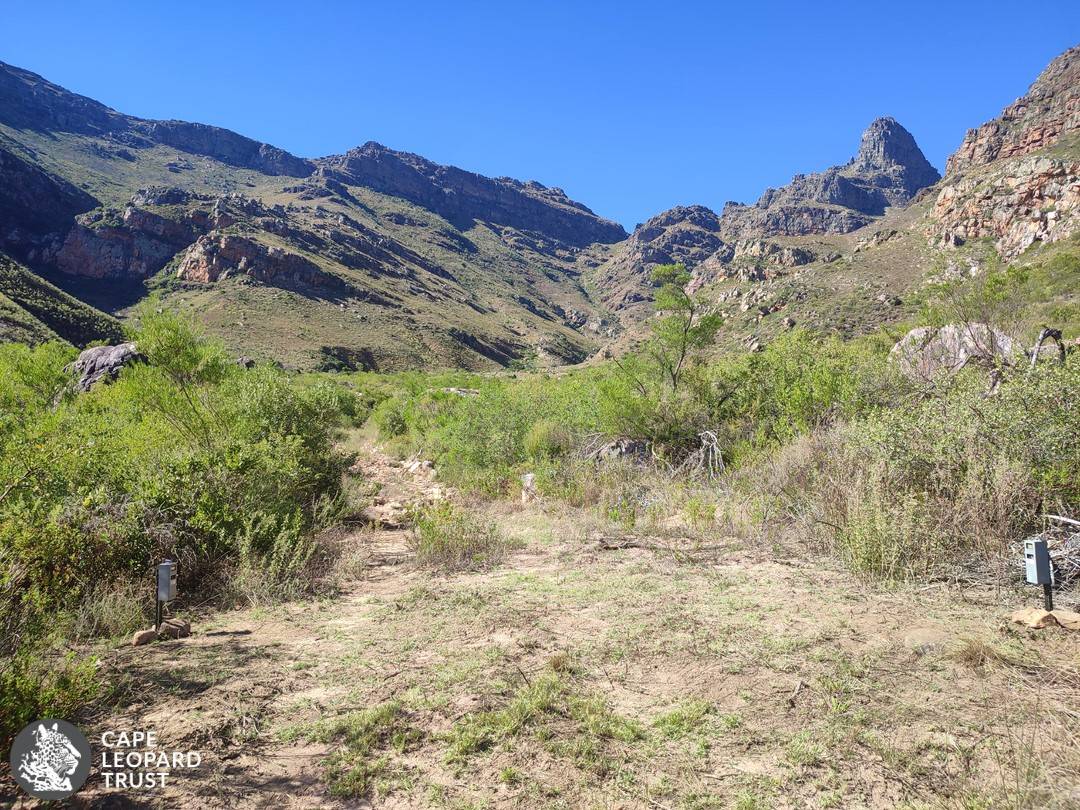
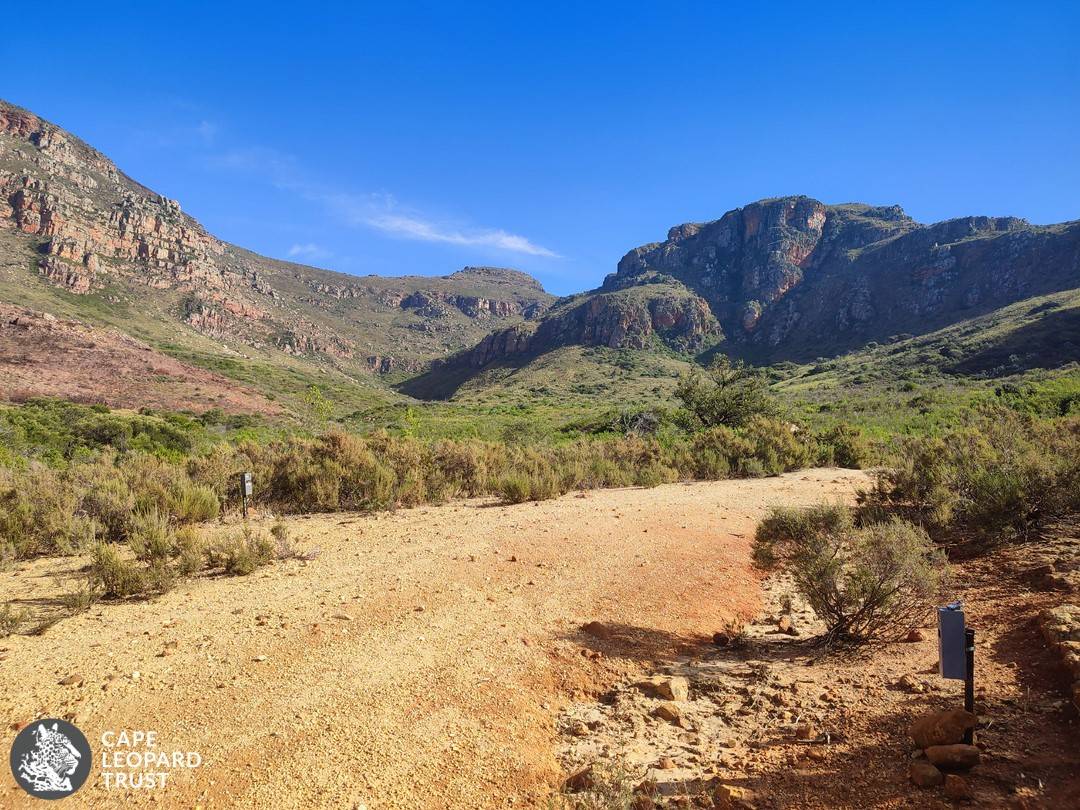
Each leopard has a unique rosette pattern, which enables our researchers to individually identify each cat. Camera traps can be deployed singly, but since each leopard’s left and right sides also differ, a camera station should ideally consist of two cameras opposite each other. Such double stations are used to compile leopard ‘identikits’ – simultaneous photos of both an individual's left and right flanks.
A camera survey consists of multiple camera stations placed across a large mountainous region, all operating continuously for the duration of several months. Photos are collated, sorted, and analysed, with all leopard photos identified to the level of the individual leopard. Using advanced statistical models, we can then estimate the density of the leopard population from the photo data.
An added advantage of camera traps is that they are non-selective, capturing everything that moves, thus gathering data on other mammals as well. These non-leopard photos are equally useful and are submitted to various databases and utilised in several studies.
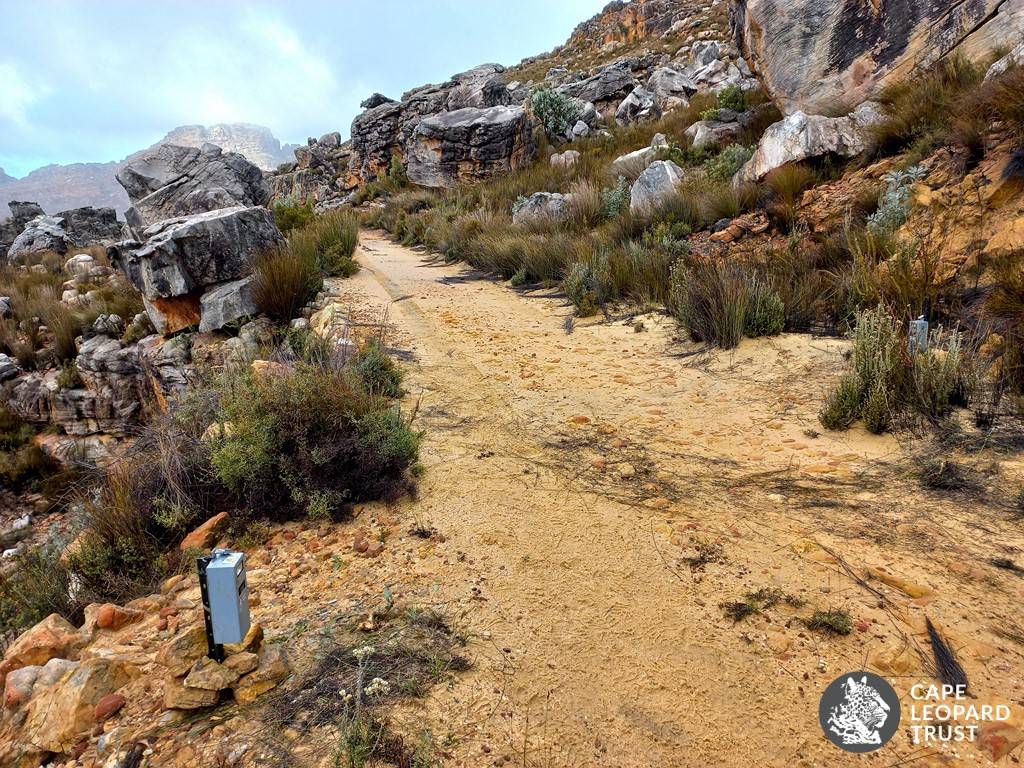
Choosing the right camera trap site is very important. One must be quite sure that a leopard will pass by the spot at some stage. Fortunately for us, most leopards will take the path of least resistance when given a choice, and as such they often patrol their territories via well-used game paths, hiking trails, quiet jeep tracks and gravel roads, dry watercourses etc. We also look for places where animal movement is naturally channelled by geographic features such as ridge lines, saddles, dense vegetation or large boulders. This helps us to narrow down the possible sites suitable for a camera station.
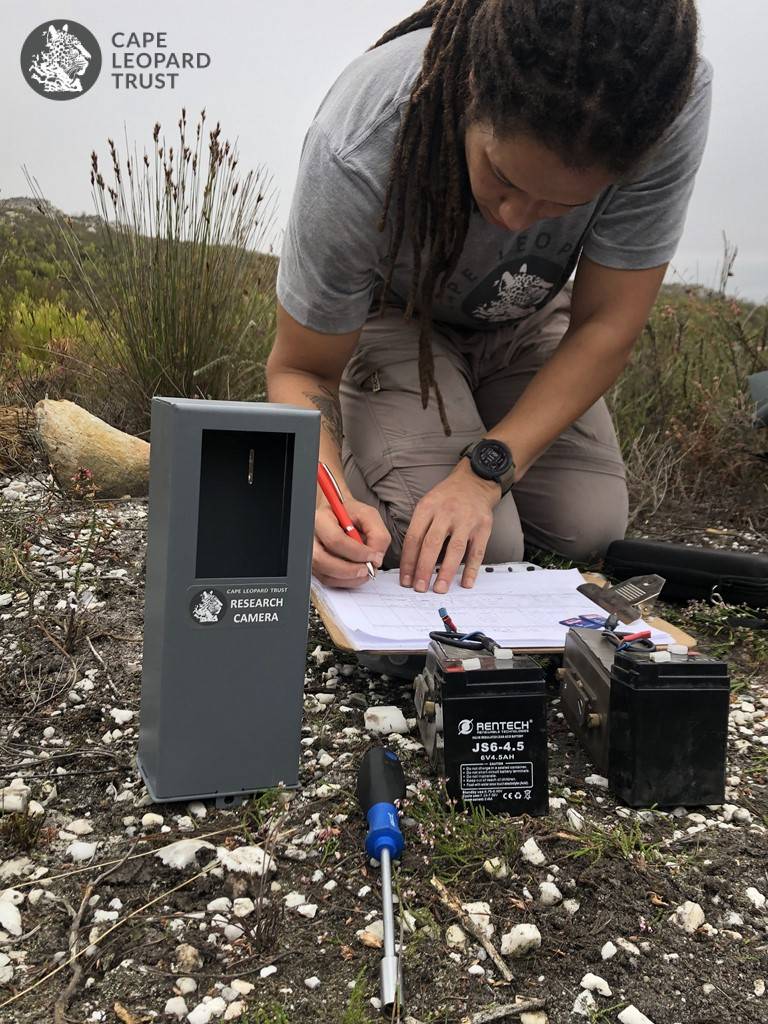
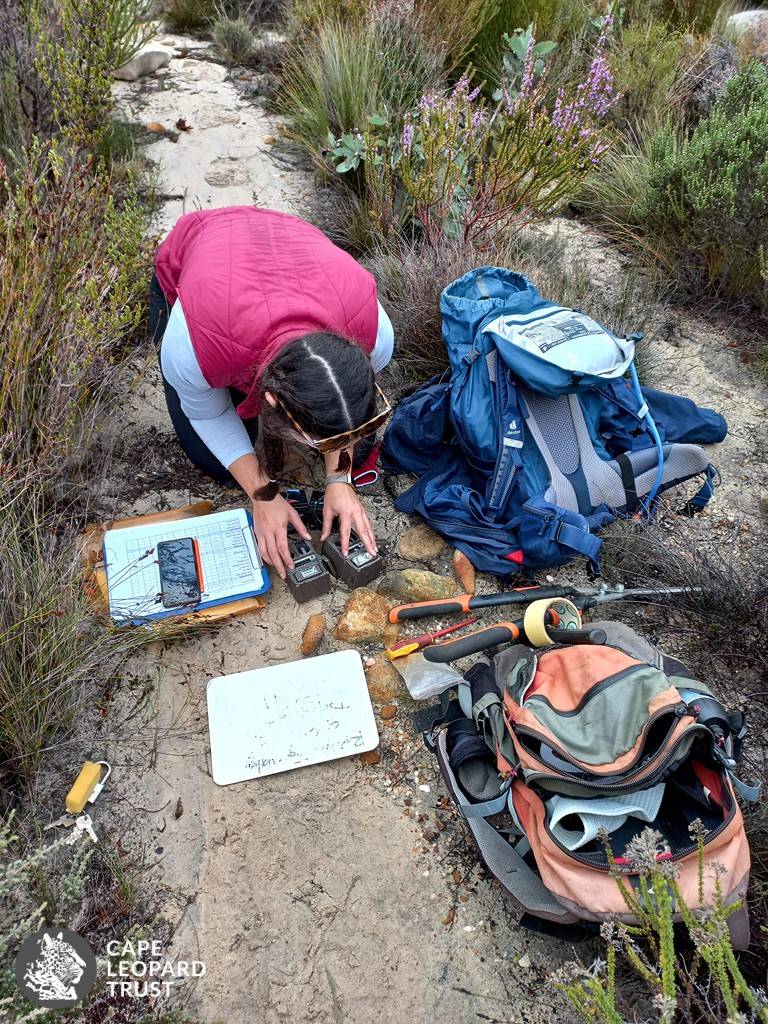
The field signs that leopards leave behind are the final pointers that lead us to select the best camera trap sites. This includes leopard spoor (tracks), leopard scat (droppings), scratch trees and scrape sites. Once a site is selected, camera traps are meticulously set up and optimised to get the best possible leopard flank shot – and then we wait for the secretive big cats to saunter past and hopefully gift us with a spotted selfie!